What Is Physical AI? A Practical Guide to AI That Acts in the Real World
The artificial intelligence revolution has, until recently, been largely confined to the digital realm. We have sophisticated systems capable of writing elegant poetry, generating photorealistic images from simple text prompts, and composing complex software architecture. However, despite their massive cognitive capabilities, these systems have historically lacked physical presence. They could not brew you a cup of coffee, fold your laundry, navigate a complex construction site, or assemble a delicate piece of machinery.
This paradigm is shifting rapidly and forcefully with the emergence of Physical AI.
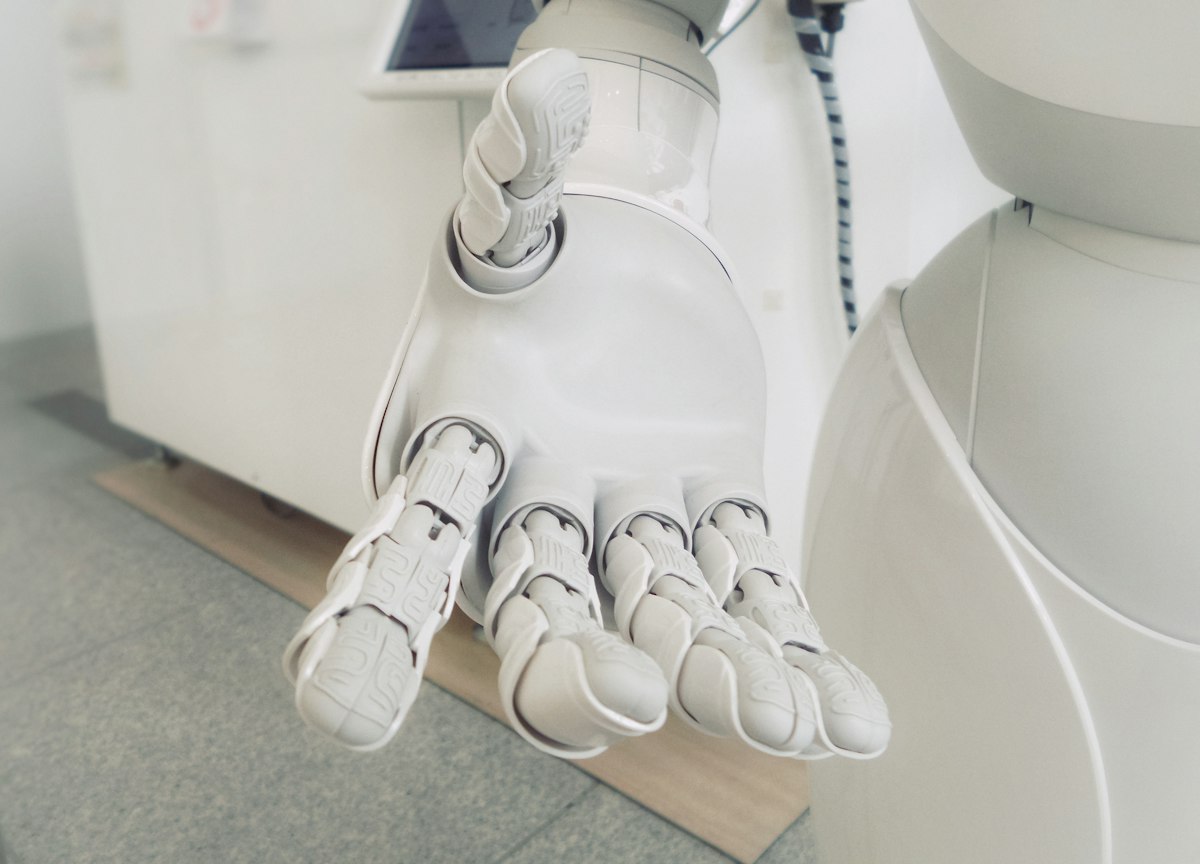
Physical AI represents the next great frontier in artificial intelligence research and development. It is the integration of high-level cognitive AI models with physical robotic systems and edge devices. It is the rigorous science and engineering of creating autonomous agents capable of perceiving their physical environment, reasoning about complex spatial and temporal dynamics in real-time, planning intricate sequences of actions, and executing those actions gracefully through mechanical hardware.
As technology giants like NVIDIA and Google DeepMind pivot their massive computing resources and brilliant research teams toward robotics, Physical AI is transitioning from isolated research laboratories into tangible, real-world applications. This practical guide explores the deep architecture of Physical AI, how it fundamentally differs from traditional generative AI, the critical hardware-software integrations, and the foundational models that are driving this revolution forward.
Generative AI vs. Physical AI: Bridging the Gap and Raising the Stakes
To fully grasp the magnitude of Physical AI, we must first understand how it differs from the Generative AI systems (like large language models and diffusion models) that currently dominate the technology landscape.
While Generative AI focuses on producing digital artifacts based on learned probabilistic patterns, Physical AI focuses on producing physical actions in a dynamic, unpredictable, and strictly governed physical world. This fundamental distinction creates several monumental engineering and safety challenges:
1. The Cost of Failure and Hallucination
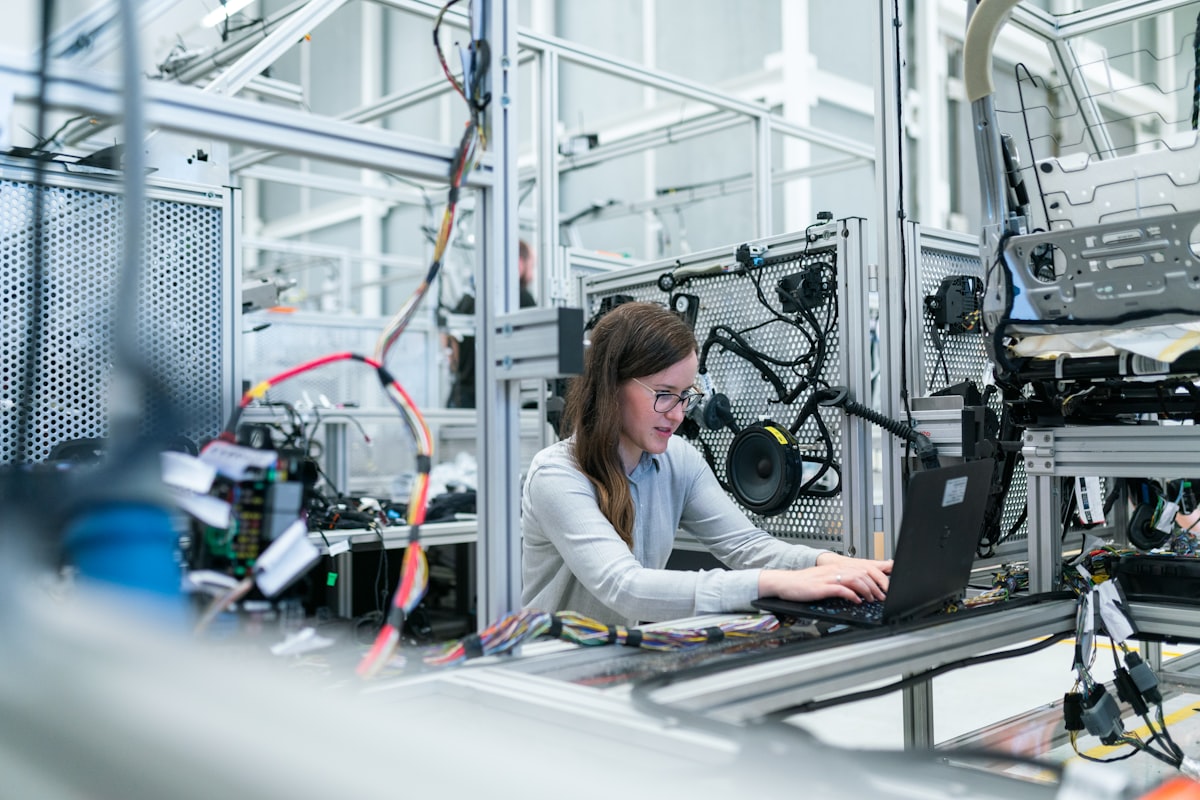
When a Generative AI model "hallucinates" or makes a factual error, the consequence is usually minor—a nonsensical sentence in a blog post, a functionally incorrect snippet of code, or a generated image with an anomalous number of fingers. When a Physical AI system hallucinates, the consequences are immediate, tangible, and potentially catastrophic. A robotic arm moving with excessive torque due to a miscalculation might crash into a laboratory table, permanently damage expensive medical equipment, or seriously injure a human operator working nearby. The physical world demands an exponentially higher threshold for safety, reliability, determinism, and precision.
2. Strict Real-Time Latency Constraints
A cloud-hosted large language model can take several seconds to generate a thoughtful response without severely degrading the user experience. A Physical AI system, however, operates under strict real-time constraints. Imagine a humanoid robot catching a thrown object or an autonomous quadruped balancing on unpredictable, uneven terrain. These systems must ingest massive amounts of sensor data, update their internal understanding of the world, compute complex kinematics, and send motor commands in mere milliseconds. The reasoning loop cannot wait for network latency; it must operate at the speed of physics.
3. Statefulness, Entropy, and Unstructured Environments
Text generation is largely a stateless translation and prediction problem within a perfectly defined digital context. The physical world, conversely, is highly entropic, continuous, and constantly changing. Lighting conditions shift dramatically, objects are moved by external actors, and physical surfaces have varying degrees of friction, compliance, and mass. A Physical AI must continuously update its internal representation of reality, accommodating for noise in its sensors and wear in its mechanical parts.
The Core Architecture of Physical AI
At its core, a Physical AI system operates on a continuous, high-frequency feedback loop that seamlessly bridges software intelligence and hardware execution. This loop typically consists of four primary stages: Perception, Reasoning, Planning, and Action.
Perception: Gathering High-Fidelity Data
Before an artificial agent can intelligently act, it must intimately understand its environment. This is achieved through a diverse array of hardware sensors that act as the robot's nervous system.
- Vision Systems: High-definition RGB cameras, stereoscopic depth sensors, LiDAR (Light Detection and Ranging), and Time-of-Flight sensors allow the robot to map three-dimensional space, segment objects from backgrounds, and track moving entities.
- Proprioception: Just as humans inherently know where their limbs are without looking at them, robots use internal joint encoders, resolvers, and Inertial Measurement Units (IMUs) to constantly track their own posture, balance, acceleration, and limb positions.
- Tactile and Force Feedback: Advanced force-torque sensors located in robotic wrists and synthetic tactile skins on grippers provide crucial feedback on how hard the robot is grasping an object. This allows the system to handle fragile items like eggs or glassware without crushing them, and to detect if an object is slipping.
Reasoning: Making Sense of the World
Once raw, noisy sensor data is ingested, the AI layer must process it into semantic, actionable meaning. Where is the designated workspace? What constitutes an obstacle? Is the surface structural or unstable? This stage relies heavily on computer vision models, spatial computing algorithms, and increasingly, multimodal foundational models that can interpret scenes mathematically, visually, and linguistically simultaneously.
Planning: Charting the Kinematic Course
With a comprehensive understanding of the environment and an overarching goal (e.g., "Extract the damaged circuit board from the server rack"), the AI must plan a sequence of physical actions. This involves complex path planning and inverse kinematics algorithms. The system must calculate the precise trajectory of multiple robotic joints simultaneously, optimizing for speed and energy efficiency while strictly avoiding self-collisions and environmental obstacles.
Action: Executing Through Actuators
Finally, the cognitive plan is translated into low-level electrical signals sent to actuators—the electric motors, hydraulic pistons, or pneumatic artificial muscles that physically move the robot's structure. The control systems (often utilizing PID controllers alongside neural networks) must apply exactly the right amount of torque at exactly the right microsecond to execute the motion smoothly, adjusting dynamically to unexpected resistance.
The Rise of Robot Learning
Historically, robots were programmed using rigid, deterministic code. An engineer would mathematically define every coordinate and joint angle required to move a robotic arm from point A to point B in a highly controlled factory setting. This deterministic approach works flawlessly for repetitive automotive welding, but it fails completely in unstructured, human-centric environments like domestic kitchens, hospital wards, or disaster recovery zones.
Physical AI relies on Robot Learning, a paradigm that allows systems to learn generalized behaviors through data and experience rather than explicit, brittle programming.
Imitation Learning and Teleoperation
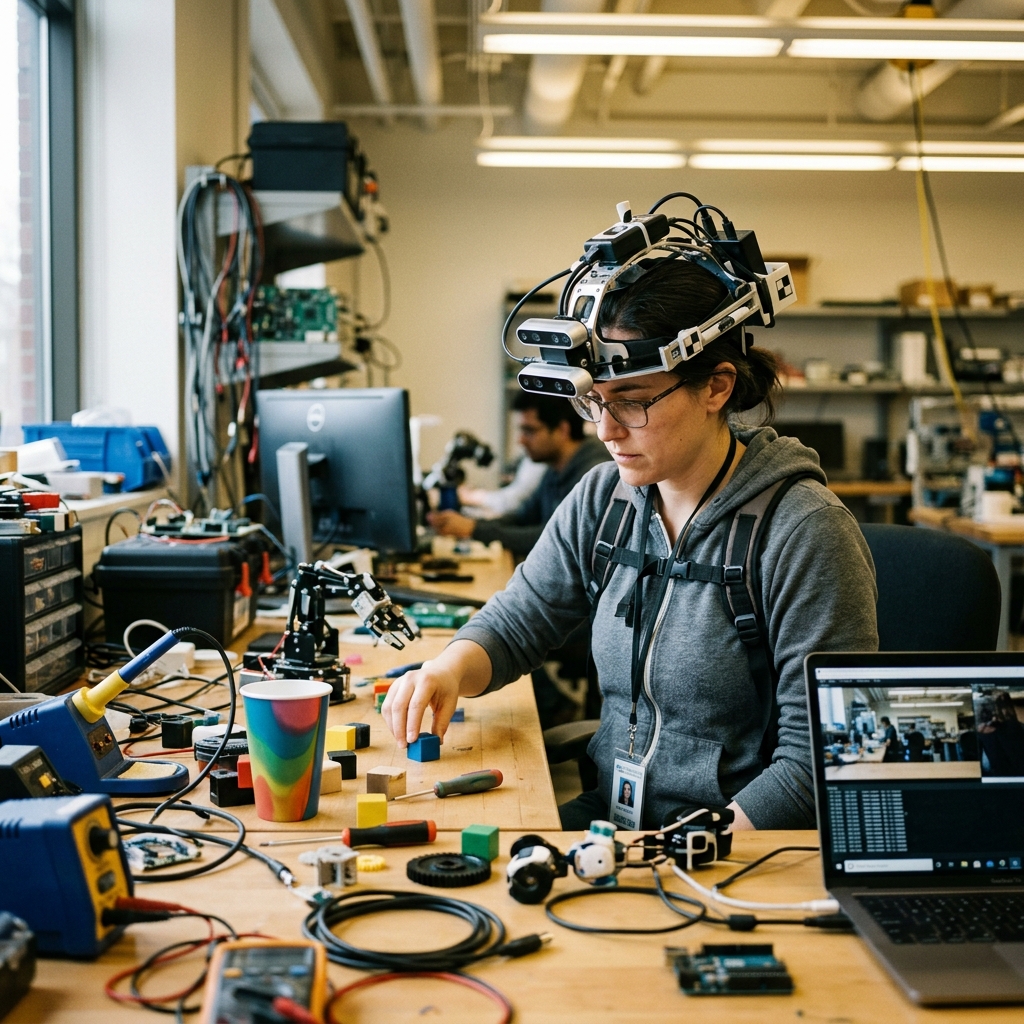
One of the most effective and rapidly scaling methods for teaching a Physical AI is Imitation Learning (or Behavioral Cloning). Human operators use teleoperation rigs—often involving VR headsets and haptic feedback controllers—to perform tasks manually through the robot's body. As the human performs the task, the system records the video feed from the robot's cameras in synchronization with the exact joint torques and movements made by the human operator. By training large neural networks on thousands of these recorded demonstrations, the models learn to map raw visual inputs directly to motor outputs—a process known as end-to-end learning. Projects like Google DeepMind's ALOHA have successfully utilized this exact methodology to teach dual-arm robots highly complex, dexterous tasks such as cooking meals, tying shoelaces, and cleaning spills.
Reinforcement Learning (RL) and Sim-to-Real Transfer
Reinforcement Learning allows an AI agent to learn optimal behaviors through autonomous trial and error. The AI is given an objective function (a goal) and is rewarded mathematically when it makes progress. However, training robots via trial and error in the physical world is prohibitively slow, expensive, and dangerous—a robot might destroy its own motors before learning to walk. To solve this, researchers train RL agents inside highly accurate physics simulators. The challenge here is the Sim-to-Real Gap; because no simulation is perfect, an AI that performs well in software often fails in the real world due to unsimulated friction, sensor noise, or motor latency. Techniques like Domain Randomization (randomly changing the physics parameters during simulation) are heavily employed to make the AI robust enough to survive the transition to reality.
World Models: Simulating Physics in the Mind of the AI
A massive, paradigm-shifting breakthrough in Physical AI is the development of scalable World Models.
In cognitive science, a world model is an internal representation that an agent uses to simulate and predict the outcomes of its actions before taking them. When a human looks at a glass of water placed precariously close to the edge of a table, our internal biological world model immediately predicts that bumping the table will cause the glass to fall and shatter.
For a robot to operate safely and intelligently, it requires this same intuitive predictive capability. By training on vast amounts of video data and physical interaction logs, modern AI systems are learning to inherently predict the future state of an environment based on their current proposed actions. If the AI "imagines" through its world model that applying a certain force trajectory will crush an object or cause a loss of balance, it can autonomously adjust its physical plan before ever sending voltage to a physical motor.
Companies like NVIDIA are heavily investing in this specific space, utilizing their Omniverse platform to create hyper-realistic, physically accurate digital twins of the real world. These simulations allow AI agents to experience millions of years of simulated physics training, interacting with complex world models, before they are ever deployed into a real, physical chassis.
Vision-Language-Action (VLA) Models: The Brain of Physical AI
Perhaps the most exciting and consequential development in Physical AI over the past few years is the rise of Vision-Language-Action (VLA) models.
Traditional Large Language Models (LLMs) output text. Vision-Language Models (VLMs) can describe images. But VLA models take in text and visual data, and directly output physical robotic actions. Google DeepMind has been a definitive pioneer in this space with their Robotics Transformer (RT) models, including RT-1, RT-2, and the collaborative RT-X.
With a VLA model, a human user can give a high-level, unstructured natural language command like, "Pick up the toy dinosaur and put it next to the blue block, but avoid knocking over the water cup." The VLA model utilizes its multimodal vision to identify the dinosaur, the block, and the cup. It uses its language understanding to process the constraints of the command, drawing upon generalized knowledge it learned from internet text. Most importantly, it directly outputs the low-level motor control commands (such as end-effector target poses or joint velocities) required to perform the task.
This multimodal, end-to-end approach enables the holy grail of robotics: generalization. Instead of building a specific software stack for folding laundry and a completely separate stack for opening doors, a single foundational VLA model can theoretically perform any physical task it has been trained on, reasoning through novel situations using semantic knowledge. If you ask an RT-2 equipped robot to "pick up the extinct animal," it knows to grab the plastic dinosaur because it links its internet-derived semantic knowledge of extinction to the visual representation of the toy, and translates that into physical arm movements.
Real-World Data: The Ultimate Bottleneck
While algorithmic breakthroughs like VLA models and World Models are accelerating at a breathtaking pace, the absolute biggest hurdle facing Physical AI today is the data bottleneck.
Language models like ChatGPT were trained on the entire public internet—trillions of tokens of easily accessible text. There is no equivalent "internet of physical actions." To train a capable robot, engineers need highly specific, incredibly high-quality multimodal data linking video feeds to joint torque values, spatial coordinates, and tactile feedback.
Gathering this real-world robotics data is agonizingly slow, hardware-intensive, expensive, and notoriously difficult to scale. It requires fleets of physical robots operating in diverse environments for thousands of hours, often under human supervision.
Bridging the Robotics Data Gap
The industry is aggressively addressing this data bottleneck through two primary avenues:
- Massive Synthetic Data Generation: Using platforms like NVIDIA Isaac Sim to generate colossal datasets of simulated training environments. Engineers procedurally generate millions of kitchens, factories, and warehouses, allowing AI to train on diverse visual and physical scenarios. While simulation rendering is nearing photorealism, closing the physical sim-to-real gap remains an active area of intense research.
- Cross-Embodiment Data Sharing and Standardization: Recognizing that no single lab can gather enough data, initiatives like the Open X-Embodiment dataset (spearheaded by Google DeepMind in collaboration with dozens of academic institutions) are pooling interaction data from vastly different robotic platforms. By training a single foundational model on data from robotic quadruped dogs, single-arm industrial manipulators, and complex humanoid robots simultaneously, the AI models learn deeper, more generalized representations of physical physics and spatial geometry.
The Future: General Purpose Robots and Embodied Intelligence
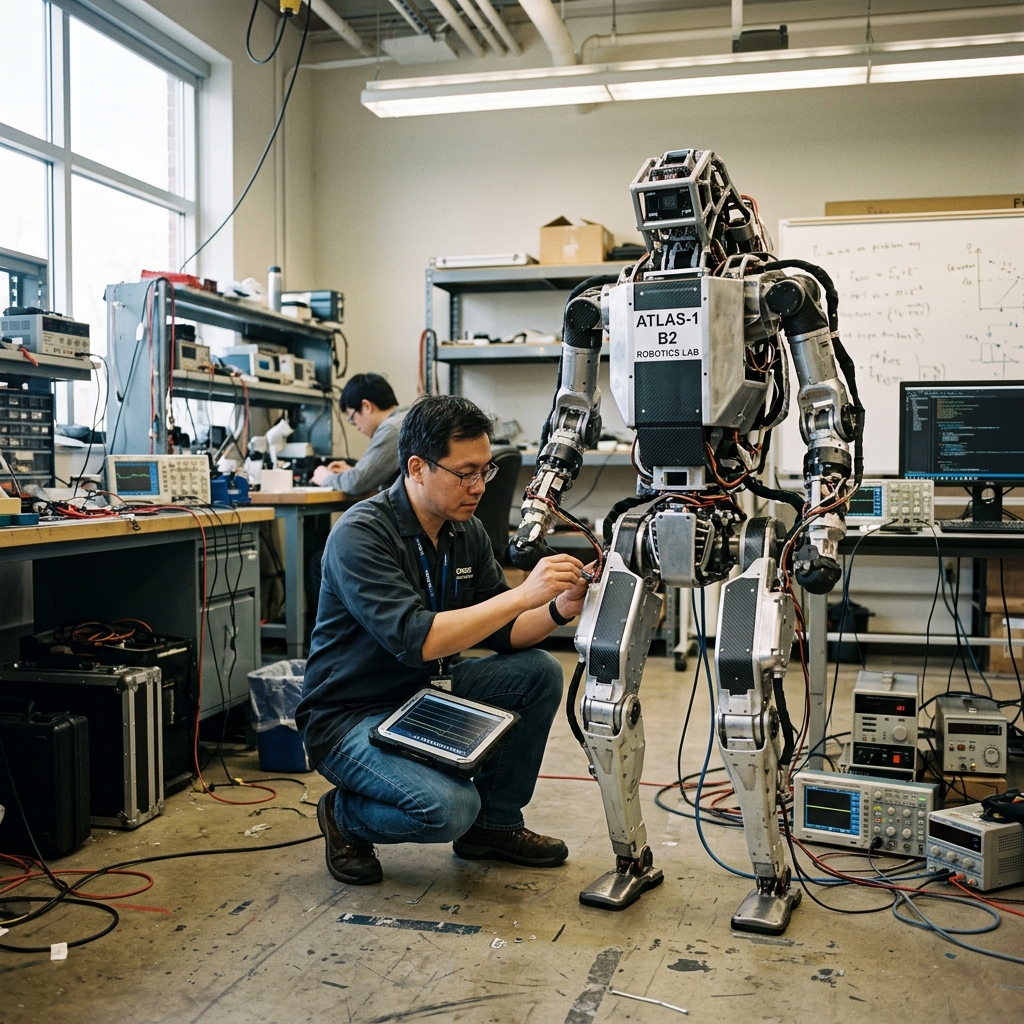
The rapid convergence of multimodal foundational VLA models, advanced predictive world models, and scalable GPU-accelerated simulation is paving the way for General Purpose Robots (GPRs). NVIDIA's Project GR00T, a general-purpose foundational model specifically designed to serve as the "brain" for humanoid robots, exemplifies this massive industry ambition. By providing a centralized cognitive engine that inherently understands language, video, and physical interaction, companies are finally building robots that can adapt to messy human environments, rather than requiring those environments to be rigidly adapted for the robots.
Physical AI is not merely about making smarter industrial machines; it is about extending the reach, capability, and agency of computational intelligence directly into the physical world we inhabit. As the industry solves the remaining challenges of real-world data acquisition, edge computing latency, and robust safety alignment, Physical AI stands poised to profoundly transform manufacturing, healthcare, logistics, disaster response, and eventually, our daily lives at home.